

The Moment the Earthquake Struck
Exactly one year ago, on March 28, 2025, at 12:50 PM.
At that moment, I had just finished lunch and resumed working on my computer at our office in Yangon, about 600 kilometers from the epicenter in Sagaing.
I felt a slow, horizontal tremor. As the staff in the office and I exchanged words like, “Is it shaking? Could it be an earthquake?” we received a phone call from COO Ms. Sato in Japan. She told us, “I was on the phone with Dr. Yoshioka when there was a loud noise, and he shouted, ‘It’s an earthquake!’ before the call suddenly cut off.”
Dr. Yoshioka had been providing medical care at Wachet Hospital. That meant Sagaing, near Wachet Hospital, must have been severely affected. We immediately began gathering information, dividing tasks among the staff in the office, and repeatedly tried calling our local team in Wachet but none of the calls went through.
Before long, images began appearing on social media: one of the bridges connecting Mandalay and Sagaing had collapsed, and buildings were destroyed across multiple areas.
About an hour after the earthquake, we finally managed to connect with Dr. Yoshioka. His first words were:
“The hospital… has collapsed.”
Wachet Hospital, our starting point and the core base of our medical activities, was no longer usable.
Even so, we could not stop.
“We have to do something.”
From that moment, our emergency disaster response began, continuing for about a month. Even now, a year later, that moment remains vividly etched in my memory.
One Year Later: The Reality on the Ground
As the one-year mark approached, conversations with staff who experienced the earthquake while working at the hospital and who continue to live in the affected areas have slightly increased. We find ourselves saying, “It’s already been a year.”
At the same time, without such a milestone, opportunities to talk about the earthquake have gradually faded.
But that does not mean its impact has disappeared.
Looking across the city of Sagaing, the large central market building remains closed and off-limits, left as it was. In its place, rows of makeshift stalls line the streets, where people now shop.
At schools, limited temporary classrooms are shared by multiple grade levels.
The collapsed bridge has been partially cleared, but sections of it remain.
Some buildings with unclear ownership have also been left in their damaged state since the time of the earthquake.
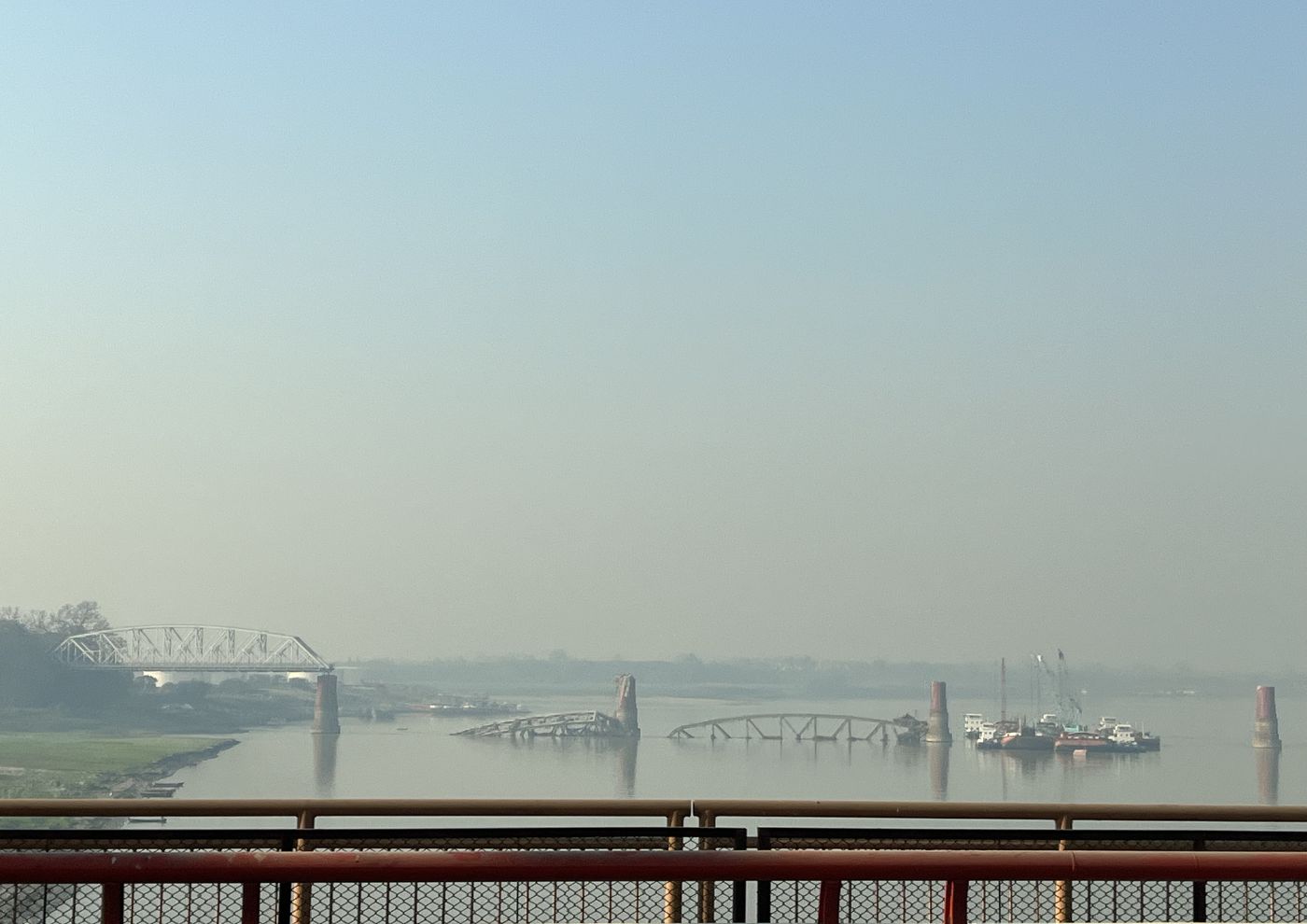
A partially collapsed bridge still remaining
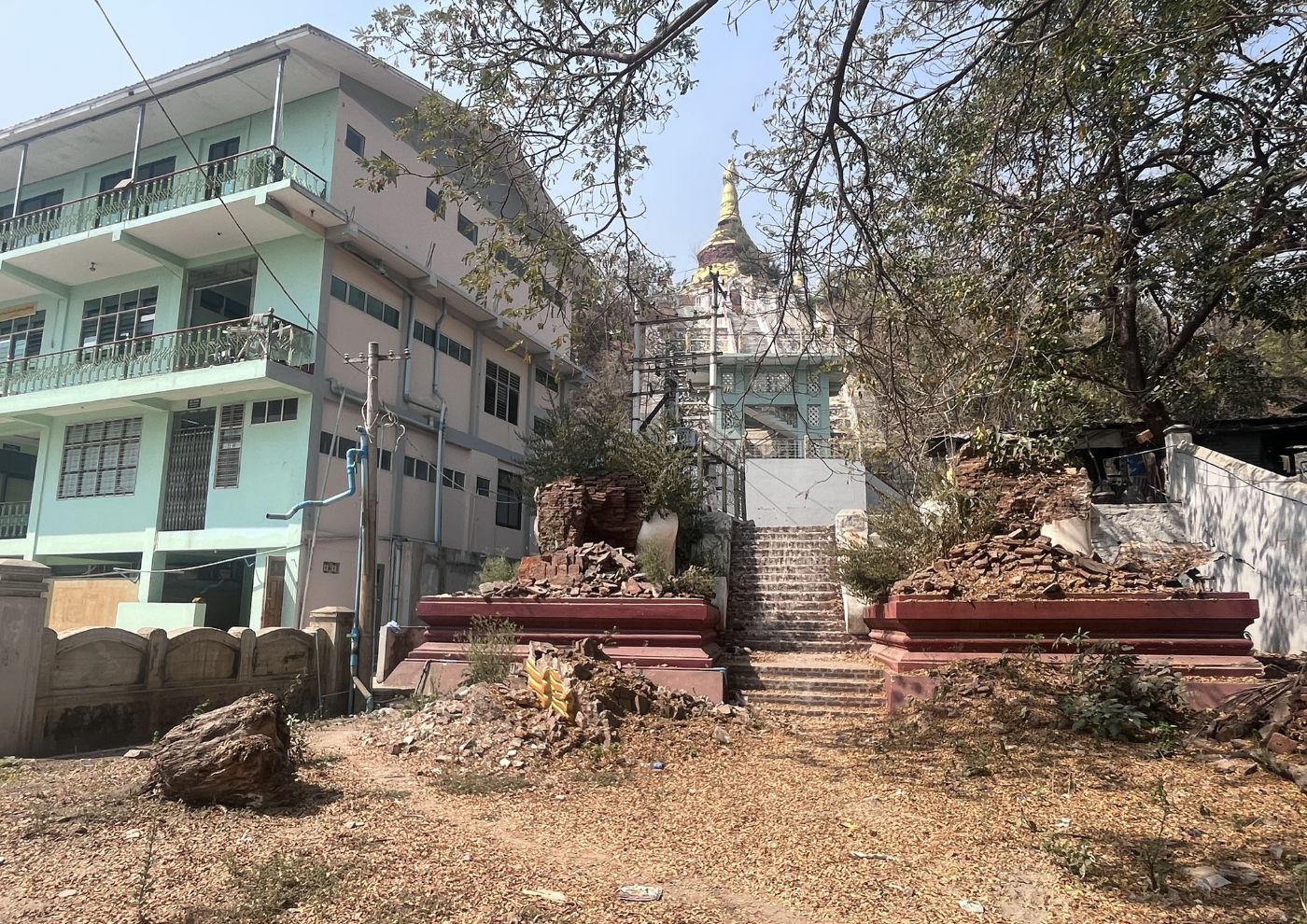
A lion statue left untouched even after one year
In addition to the ongoing challenges that existed even before the earthquake such as rising prices and electricity shortages due to the unstable situation the conflict between the military and pro-democracy forces has intensified in areas around Sagaing, including near Wachet Hospital. This has further worsened security conditions and made daily life more difficult.
And yet, during the daytime, the streets are filled with people and motorbikes move constantly. The city remains lively with people going to work, school, and shopping. It appears that people are striving to live with strength and optimism.
Of course, among them are those who lost family members or homes in the earthquake, carrying pain and grief within them while trying to move forward. Even so, the overall sense of vitality in the city may reflect the resilience of people who have long faced and overcome various hardships.
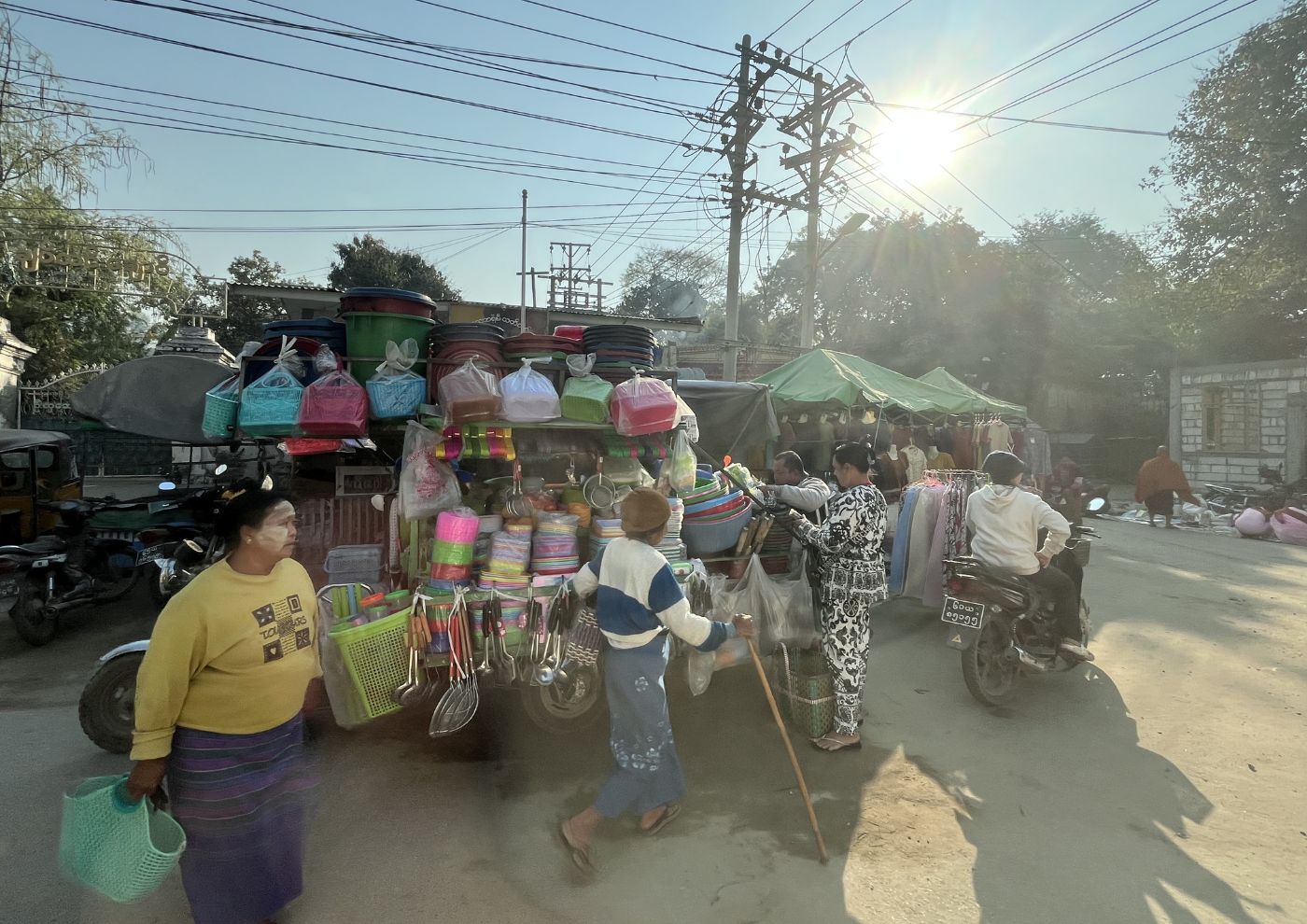
A bustling market filled with people
Continuing Medical Care, No Matter the Circumstances
Wachet Hospital, where part of the building was damaged and restricted from use, completed partial repairs about two months after the disaster, allowing some medical services to resume within the facility in early June. By early August, four months after the earthquake, full operations had resumed.
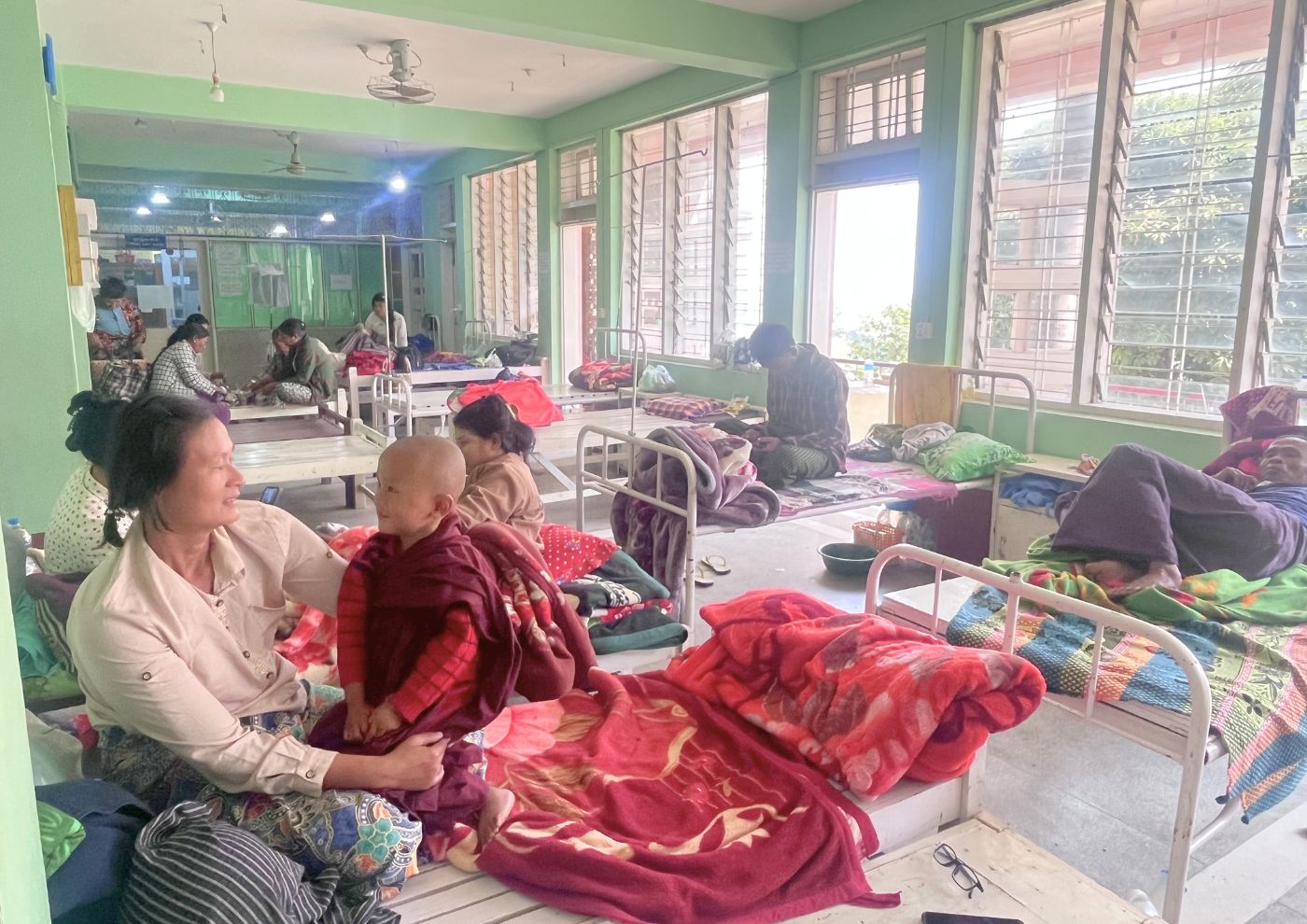
Inpatient ward at Wachet Hospital
Due to the worsening situation in the surrounding areas, it is becoming increasingly difficult for patients to even reach the hospital.
Even so, there are still patients who come to us, relying on our care.
That is precisely why we remain committed to continuing our work without being swayed by disasters or changing circumstances as a “last line of defense,” with the determination to never stop providing medical care.
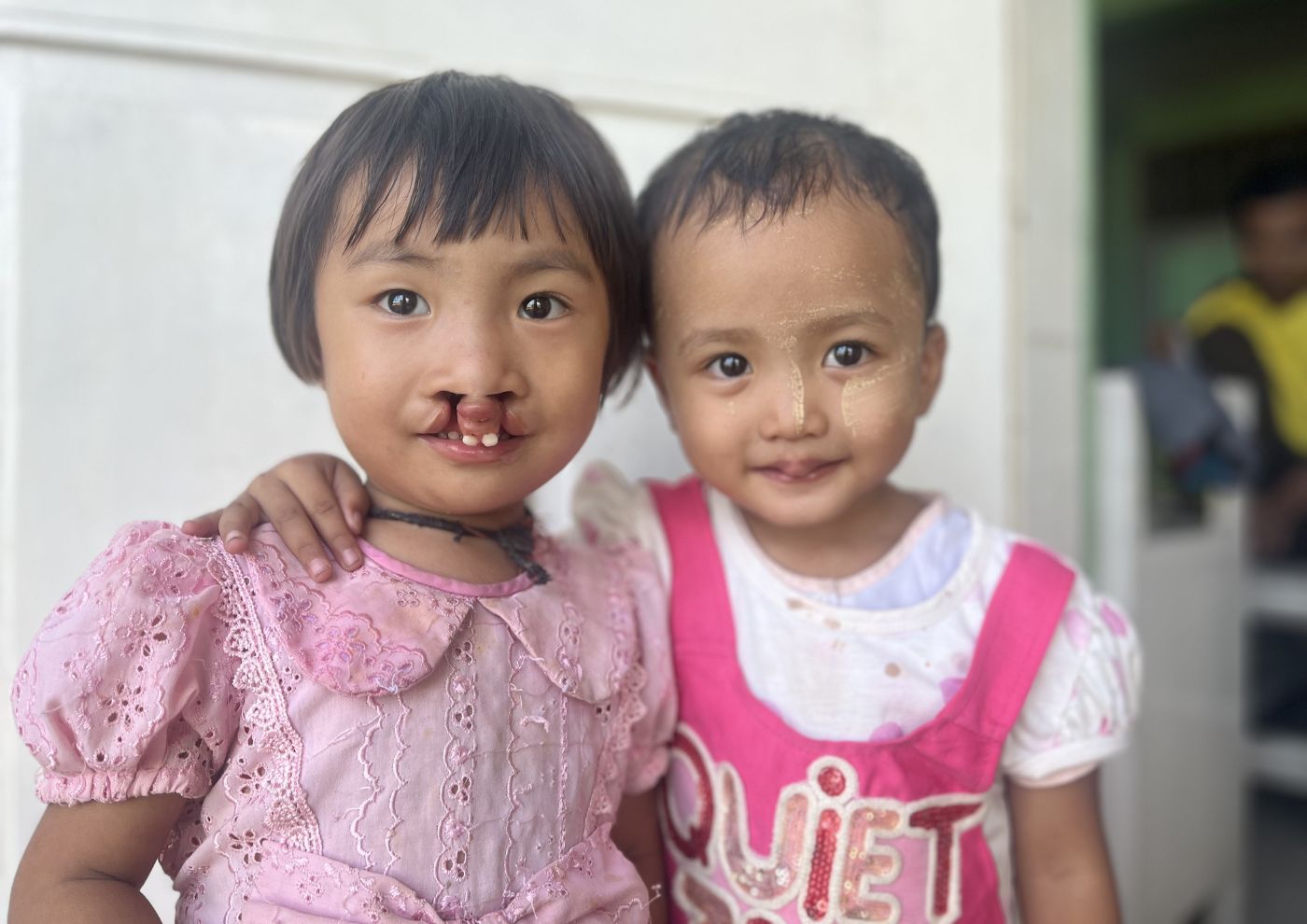
A patient before surgery
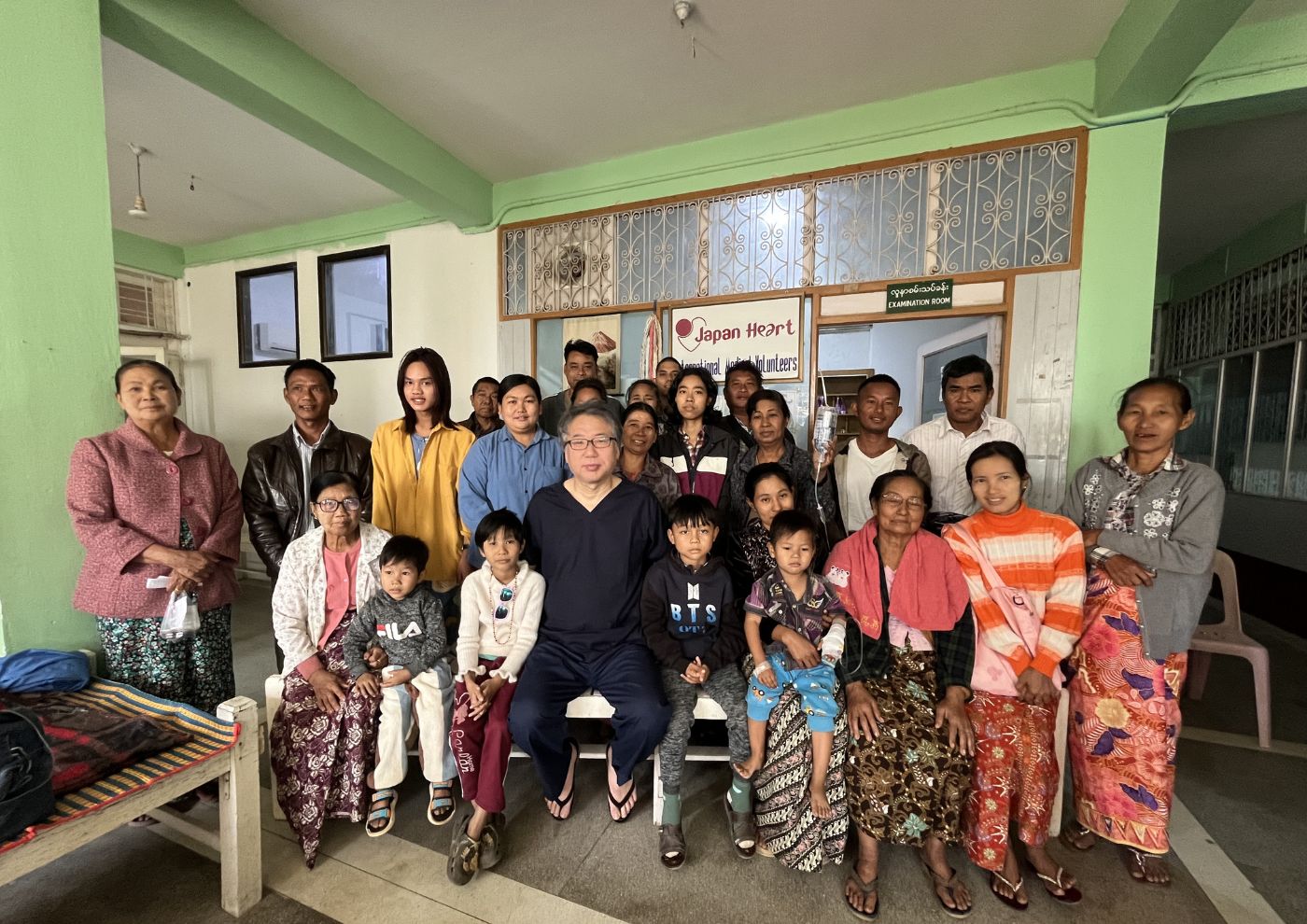
A patient after treatment with their family
Tomoko Kono
Myanmar Medical Program, Japan Heart